
Building Digital Personas: Why the Pipeline Matters More Than the Model
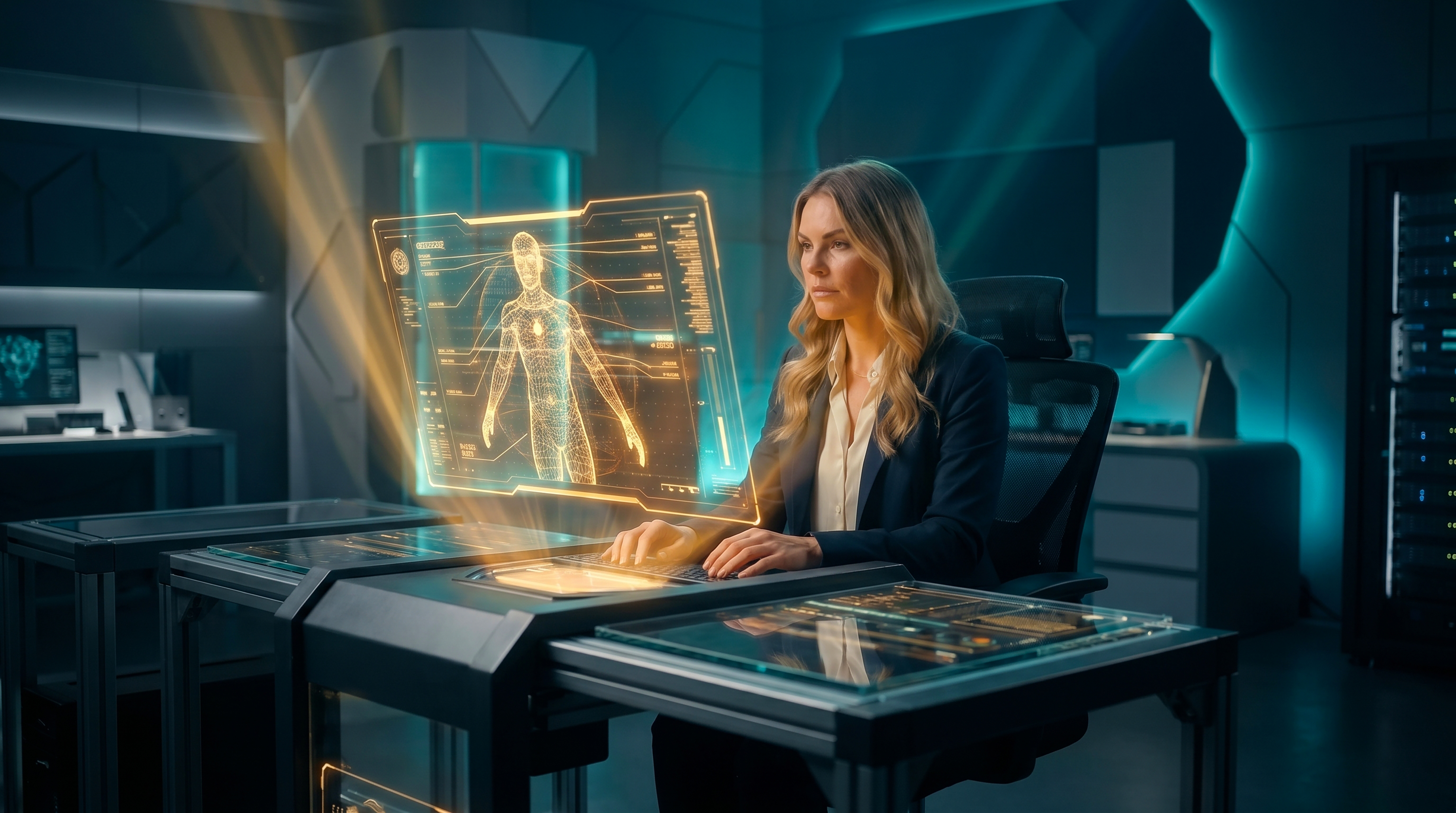
When most people hear the phrase "digital persona," they immediately think about artificial intelligence.
What model powers it?
How intelligent is it?
How realistic are the responses?
Those questions are important, but they only describe one layer of the experience.
Creating a believable digital persona requires far more than a language model. Before a persona can speak, move, appear in augmented reality, or exist within an immersive environment, an enormous amount of infrastructure has to work together behind the scenes.
At HollaCo, we've learned that the long-term success of a digital persona depends less on any individual technology and more on the pipeline used to build, maintain, and evolve it.
The model may power the conversation.
The pipeline powers everything else.
Capture Is Only the BeginningEvery digital persona begins with source material.
That source material may include photographs, video recordings, voice samples, motion references, facial expressions, and other forms of digital capture. Together, these assets create the foundation from which a persona is built.
Many people assume the capture phase is the difficult part.
In reality, capture is simply the starting point.
The challenge begins when those source materials must be transformed into assets that can operate across phones, tablets, desktops, augmented reality experiences, and future XR environments. The goal is not simply to reproduce a person's appearance. The goal is to create a digital asset that remains flexible, scalable, and maintainable as technology evolves.
A successful digital persona starts with good source material but depends on everything that happens afterward.
Why Geometry Still MattersArtificial intelligence often dominates technology headlines, but geometry remains one of the most important components of digital human development.
Every 3D persona is ultimately built upon a mesh structure that determines how the character deforms, animates, and performs across devices.
Poor geometry creates limitations everywhere else in the pipeline. Facial expressions become less natural. Animations become harder to manage. Performance suffers across mobile and immersive platforms.
This is why processes such as retopology remain essential.
Retopology allows a high-fidelity capture to be transformed into an optimized production asset that can support animation, rendering, and real-time interaction. While users never see the topology directly, they experience its effects every time a character smiles, turns its head, or reacts naturally within an environment.
Good topology creates flexibility.
Flexibility creates longevity.
Expression Creates BelievabilityHuman beings are remarkably sensitive to facial movement.
A slight eyebrow raise, a subtle smile, or a shift in eye focus can dramatically influence how a digital character is perceived.
Because of this, expression systems play a central role in persona development.
Modern digital humans rely on extensive facial animation libraries, blend shapes, deformation systems, and expression controls that allow characters to communicate naturally across a wide range of interactions.
The objective isn't simply to animate a face.
It's to create a system capable of supporting thousands of future interactions without requiring manual intervention for every expression.
As digital personas become more common in conversational AI, customer engagement, entertainment, and education, scalable expression systems become increasingly important.
The Runtime Is the ProductOne of the most overlooked realities of digital persona development is that users never interact with source files.
They interact with the runtime.
The runtime is where rendering, animation, audio, interaction systems, and device-specific optimizations come together to create the final experience.
This becomes particularly important as digital personas expand into augmented reality (AR), virtual reality (VR), mixed reality, and WebXR environments.
A persona that performs well on a desktop browser may behave very differently on a mobile device or spatial computing platform. Rendering budgets, network conditions, hardware capabilities, and environmental factors all influence the final experience.
For this reason, building a digital persona is not simply a content problem.
It's a platform engineering problem.
The runtime ultimately determines how users experience the persona.
Regeneration Beats MaintenancePerhaps the most important lesson we've learned is that digital personas should never be treated as finished products.
Technology moves too quickly.
Rendering engines improve. Animation systems evolve. New hardware platforms emerge. AI capabilities continue to expand.
A persona that is locked to a single generation of technology becomes increasingly difficult to maintain over time.
Instead, we design for regeneration.
Source assets, rigging systems, expression libraries, and rendering workflows should be capable of producing improved versions of a persona as new technologies become available.
This philosophy changes how the entire system is built.
The asset is not the artifact.
The pipeline is the artifact.
When the pipeline is designed correctly, the persona can evolve continuously without losing quality or requiring complete reconstruction.
Building for the Next Generation of Digital ExperiencesThe future of digital personas extends far beyond today's chat interfaces.
As augmented reality, spatial computing, conversational AI, and immersive experiences continue to mature, digital humans will increasingly appear in environments where visual fidelity, performance, and responsiveness matter just as much as intelligence.
Organizations that focus exclusively on AI models may discover that intelligence alone is not enough.
Scalable digital personas require infrastructure.
They require asset pipelines, animation systems, rendering frameworks, and deployment strategies capable of supporting continuous evolution.
At HollaCo, we believe the future belongs to platforms that can combine all of these disciplines into a unified experience.
Because creating a digital persona is not a single technology challenge.
It's a pipeline challenge.